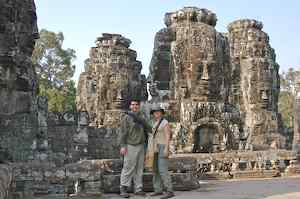
Beth and Michael in siem reap, march 2007Text about the temples copied from the APSARA website (Authority for the Protection and Management of Angkor and the Region of Siem Reap) if you want to know more... |
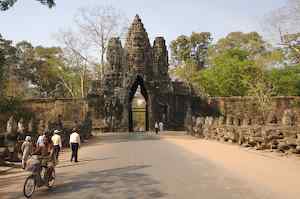
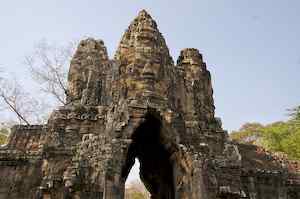
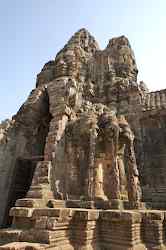
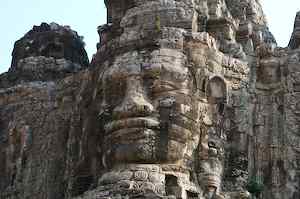
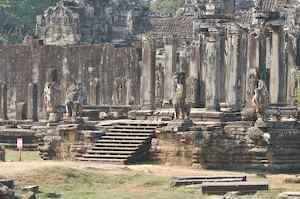
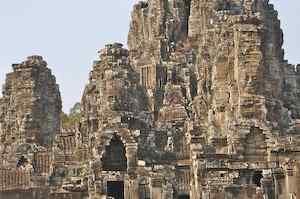
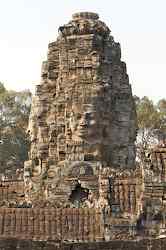
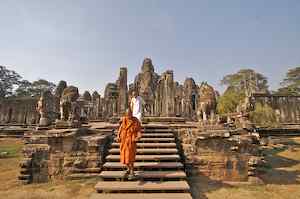
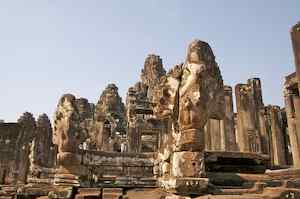
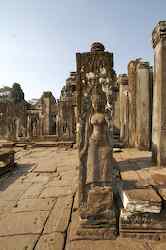
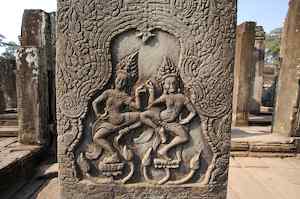
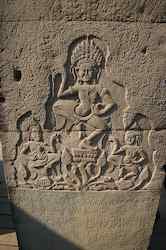
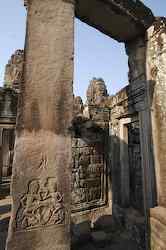
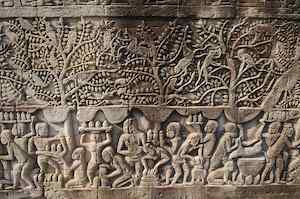
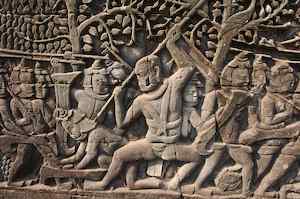
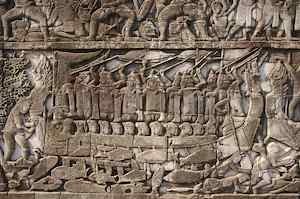
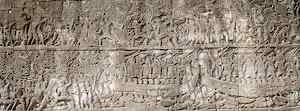
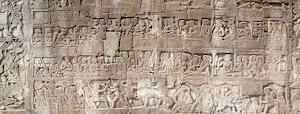
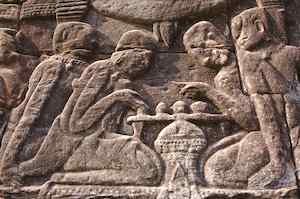
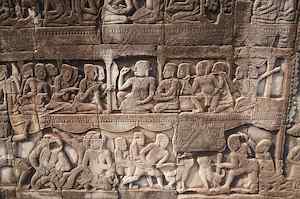
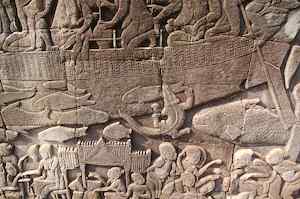
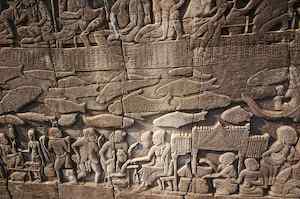
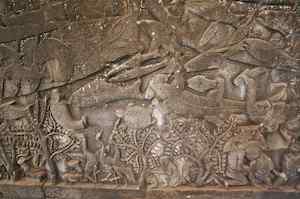
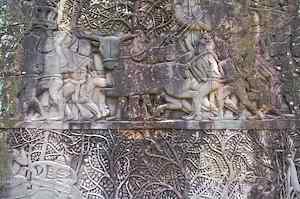
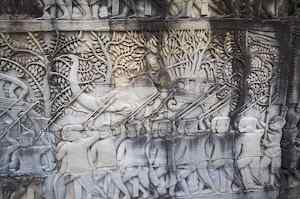
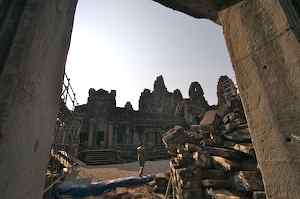
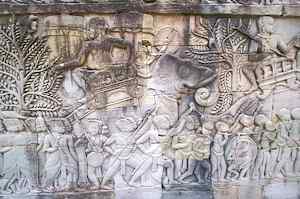
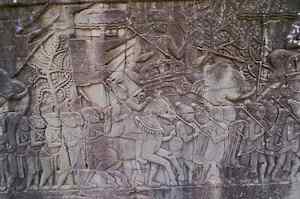
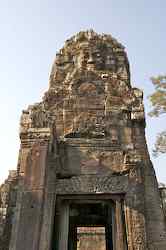
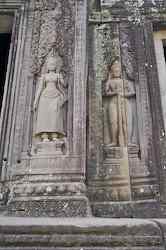
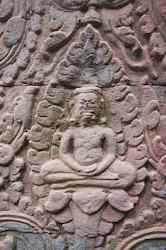
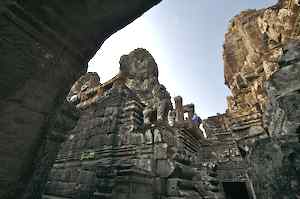
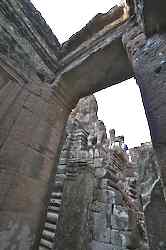
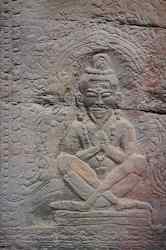
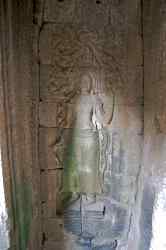
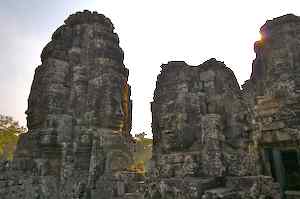
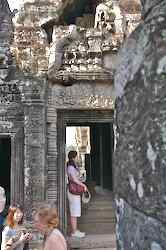
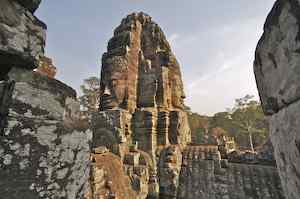
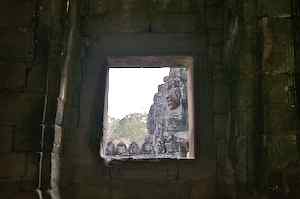
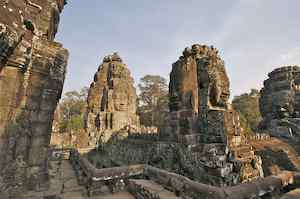
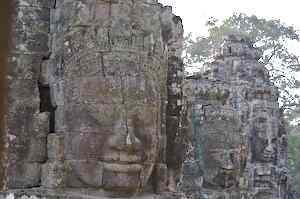
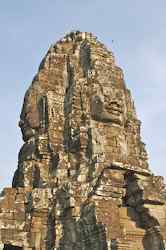
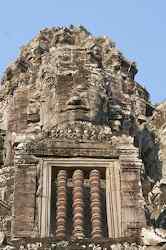
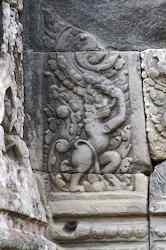
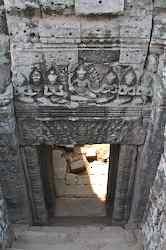
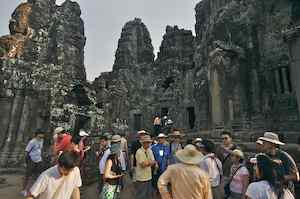
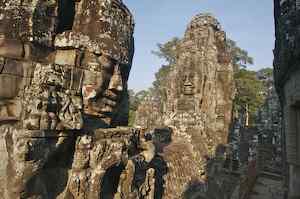
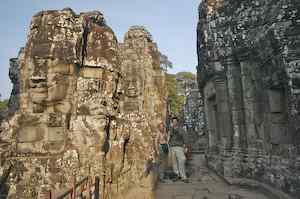
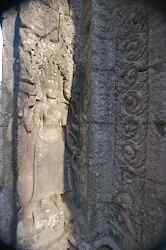
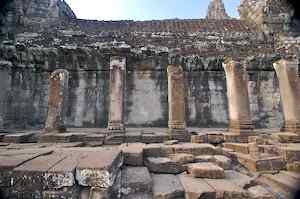
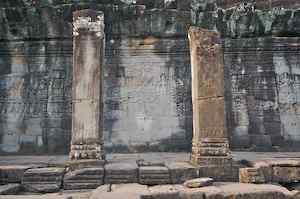
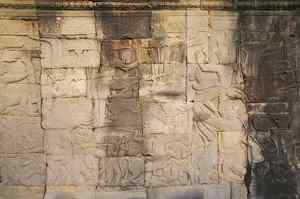
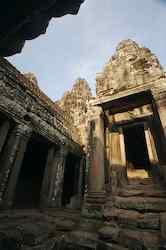
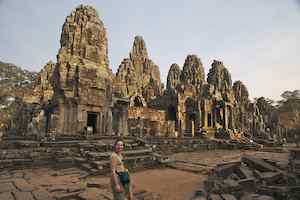
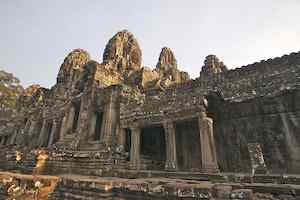
From there we went into Angkor Thom through another gate to see the Bayon. Quoting from the APSARA (Authority for the Protection and Management of Angkor and the Region of Siem Reap) website: "The temple design would seem to have been repeatedly revised over the course of construction such that four different phases have been identified. The principal elements of the final lay-out are as follows: an orthodox cross encloses the circular central sanctuary the inner galleries form a rectangle enclosing, in turn, the orthodox cross another rectangle - the outer galleries - encloses and communicates with the first through passages on each of the four axes. One of the specificities of the Bayon is its towers crowned with faces looking out to the four cardinal points. Modern Khmer call them "Prohm Bayon", with the name "Prohm" (Brahma) remaining as a vestige of Cambodia's Brahmanic past. The multiple scholarly attempts to identify the Bayon faces have generally focussed on Brahmanic-Mahayanic gods, in view of the religious particularities of Jayavarman VII's reign. The most frequently cited is Lokesvara, a Buddhist divinity widely venerated during that time. It is also possible that the faces represented that of Jayavarman VII himself, as a new expression of an old Khmer tradition of belief in the apotheosis of kings. The Bayon is also remarkable for its bas-reliefs, in particular those of the outer galleries. Certain reliefs depict historical events such as naval combat against the Cham on the Great Lake .Taking up on the artistic innovations of the Baphuon, others show touching scenes of daily life amongst common people.It is the Bayon, more than any other temple, which materializes the assembly of the principal gods of the Angkorian Empire.
|